Start with the use you have in mind
You may need enough access to inspect a parcel, a usable understory or a defined opening for a future project. Those goals call for different finishes. Describe the part you want to use and what must remain before choosing equipment or removal limits.
Clearing more land is not automatically more useful. A limited first phase may help you decide what comes next without committing the whole property. Compare methods by what they leave behind, including chips, roots and disturbed ground. The planning guide brings those decisions together so you can discuss a scope that fits your intended use.
Read the full guideDescribe the whole project to the city
An application needs to describe the work you actually intend to carry out. League City lists clearing/grubbing and grade/fill as separate review categories, so mention soil movement if it is part of the plan. Tree removal can raise another set of property-specific questions.
Do not assume a neighbor's approval or a residential exemption settles the requirements for a vacant parcel. Confirm the jurisdiction, intended removal and any associated development before scheduling disturbance. The useful outcome is a clearing scope that matches the project presented for review, with responsibility for plans and applications understood before work starts.
Read the full guideChoose what can remain below your feet
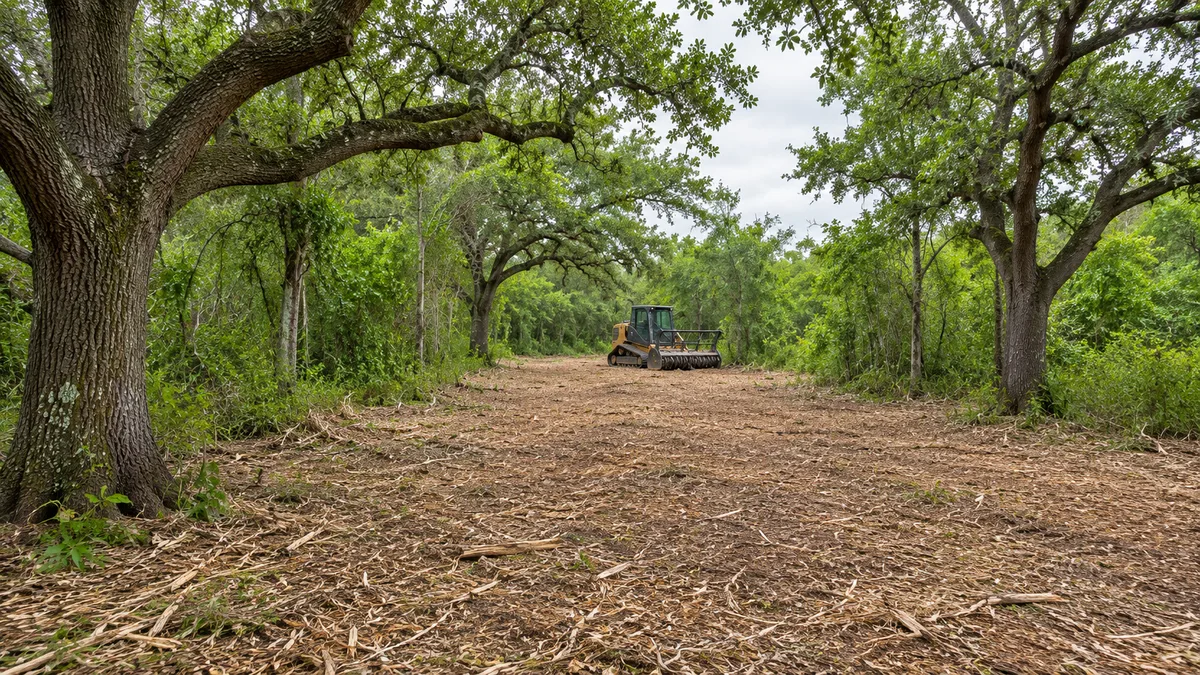
Mulching reduces suitable vegetation into material left at the surface, while grubbing addresses agreed stumps and root mass. The better fit depends on what will occupy the area afterward. A wooded walking space and a future structural footprint do not have the same requirements.
If another contractor will take over, ask what ground condition they need rather than choosing by appearance alone. Extraction may leave disturbed areas needing separate preparation, and mulching may leave roots that conflict with the next use. Make those consequences part of the decision before comparing the price of the two scopes.
Read the full guideMatch the treatment to the growth
Light vegetation and dense woody brush should not be treated as the same job. A cutting approach may suit one area while a mulching attachment is worth considering elsewhere. Vegetation size, access, hidden obstacles and the expected finish all influence that choice.
Describe what is growing and how you will use the opening, then discuss suitable equipment with the contractor. Neither approach automatically removes the root system or guarantees that growth will not return. If future maintenance is part of your plan, consider how you will reach the cleared area and what surface your own equipment needs.
Read the full guideKnow where the next contractor takes over
Clearing removes or reduces agreed vegetation; it does not automatically establish finished grades or certify ground for construction. Grubbing can remove root material, but the disturbed area may still need a separate treatment before it supports a structure or pavement.
Ask the builder or ground-preparation contractor what they need to receive, then include that handoff in the clearing discussion. Keep drainage changes, fill, compaction and access construction explicit. A quote that defines where clearing stops is easier to compare and less likely to leave you assuming that a visibly open lot is ready for every next use.
Read the full guideCompare the work inside the total
Acreage is useful, but it does not describe vegetation density, access, retained areas or the finished condition. A quote for mulching material in place is different from one that includes root extraction and haul-off. Decide which result you need before using the total to choose between contractors.
Ask about equipment transport, larger material, debris handling and any separate preparation. No single per-acre figure is published here because it would hide those differences. A practical budget discussion starts with the property details and identifies which unknowns still affect the scope, rather than pretending an area measurement answers everything.
Read the full guideMake the two descriptions match
Put the written scopes beside each other before comparing totals. Check the work boundary, retained trees, larger vegetation, stump treatment and material destination. If one quote leaves piles and another removes them, ask what that difference means for your next use.
Clarify exclusions and how unexpected conditions would be discussed before extra work. A short description such as clear the lot can leave too much open to interpretation. The comparison should let you explain what completion means, what remains on site and which tasks belong to another contractor. That is more useful than choosing a total without knowing its endpoint.
Read the full guideGather useful details without taking risks
Start with the property location, available survey or plans, approximate work area and intended use. Note the entrance, retained trees, known utilities and any old fencing or dumped material you know about. Photographs from safe, accessible positions can help explain the site, but do not enter dense brush or unstable ground for a better angle.
Relevant utility notification and additional private locating need to be resolved before disturbance. If a boundary is uncertain, identify the uncertainty instead of marking a guess. Preparation should give the clearing discussion reliable information without asking you to assess hidden conditions yourself.
Read the full guideProtect more than the trunk
Keeping a tree involves the surrounding work area as well as the trunk. Equipment travel, turning, stored debris and disturbance near roots can affect the part of the property you intend to preserve. Identify retained vegetation early and discuss a practical route around it.
Where the appropriate protection limit or tree condition is unclear, an arborist's input may be needed before the plan is settled. Do not assume a ribbon on a trunk communicates every restriction. A clear retained area helps the contractor consider what can be reached and whether the removal method or work boundary needs to change.
Read the full guideLeave water-related decisions visible
A ditch, waterway or low area can affect the clearing plan even when the immediate goal is simply better access. Identify those features and confirm the relevant jurisdiction before deciding where equipment and material can go. Removing vegetation does not authorize filling a wet area or changing the way water leaves the property.
Keep sediment control, access and any separate drainage or development work in the discussion. If the intended use requires more than vegetation removal, describe the complete project. Clearing should be planned around those decisions rather than used to make a water-related constraint disappear from view.
Read the full guideLet the route respond to the ground
A route that looks straightforward on a plan may be unsuitable when the ground is soft. Tracked equipment does not eliminate the possibility of rutting or compaction, especially where repeated travel is needed. Describe standing water, soft areas and places you want to preserve before the work is priced.
A different route, smaller initial area or change in timing may be worth discussing. Do not assume clearing vegetation will solve the reason water is present. The decision is whether the proposed equipment and sequence fit the conditions, and which findings would require the contractor to reassess the approach.
Read the full guidePlan for the opening after the machine leaves
Mulching can improve access while leaving chips, roots and some stumps. Before deciding that the area is finished, compare those conditions with your intended use. Think about how you will enter, inspect and maintain it, including the equipment you expect to use.
Some vegetation can return after cutting or mulching, so an initial opening is not a permanent eradication promise. If your plans change from walking access to construction, the remaining material may need another treatment. A useful maintenance plan starts with what actually remains, rather than assuming every mulched area can be used in the same way.
Read the full guideAsk what can stay beneath the next use
Grinding reduces a stump, while extraction removes a larger portion of the stump and root mass. They leave different conditions, and neither should be chosen only because the surface looks cleaner afterward. Ask the contractor responsible for the future structure or pavement what treatment is required in that footprint.
Extraction can leave voids and disturbed ground that need separate preparation. Identify who handles that next stage and what acceptance information they need. The clearing quote should state its endpoint so root removal is not mistaken for engineered fill, certified compaction or an assurance that the area is ready to build on.
Read the full guideChoose the destination before creating the pile
Material can be processed in place, gathered into a designated area or removed from the property. Those are different scopes with different access and handling needs. If piles remain, decide where they will go and whether they obstruct the next project.
Larger wood, roots and mixed debris may need different handling from small brush. Do not assume household collection or burning is available for the material produced. Confirm the appropriate disposal route and responsibility before accepting the scope. Knowing the destination also helps you compare quotes that otherwise use the same vague word, cleanup, for very different results.
Read the full guideConnect the clearing phase to the project plan
A commercial scope needs clear disturbance limits, retained areas, access arrangements and a defined handoff to the next contractor. Check that the clearing description matches the project plans and any approvals already being used.
If work is phased, consider its relationship to the larger development rather than assuming each opening is an unrelated job. Specify how vegetation, stumps and debris will be treated, and who handles separate grading or drainage work. A useful checklist makes responsibilities visible before mobilization and records the conditions that would require a change, rather than leaving the clearing contractor to infer the whole project from acreage alone.
Read the full guide